
You’ve probably felt it too as a digital marketer, your posts barely appear in feeds any longer. It’s crowded on Facebook, the Instagram algorithm seems to change monthly, and even TikTok isn’t making every single video go viral. Organic reach, that free way content spreads naturally, well, just isn’t like it used to be. So, is organic reach dead, or is it changing?
The truth is, it’s not dead-it has new rules. To win at social media in 2025, you need to post smarter, not more. Real stories, fun interactions, and knowing what each platform likes will be the real winners. This is why the best social media marketing course will help you master such tricks to stay ahead of the game.
What organic Reach means?
Organic reach is the number of unique users who see your content on a social media platform or search engine without any paid promotion. It measures the free, natural spread of your content. This is influenced by the platform’s algorithm, user engagement like shares and likes, and how relevant your content is to the audience.
How it works:
When you share content, a segment of your followers and possibly other users will organically come across it due to the platform’s algorithm. This may involve individuals who are already your followers as well as those who are not, and it depends on your content being captivating enough to appear in their feeds.
Why it matters:
Robust organic reach indicates to the algorithm that your content holds value, potentially resulting in increased visibility and long-term audience expansion. Additionally, it fosters trust, as individuals are more inclined to interact with content they find organically instead of through promotional means.

The Current State of Organic Reach:
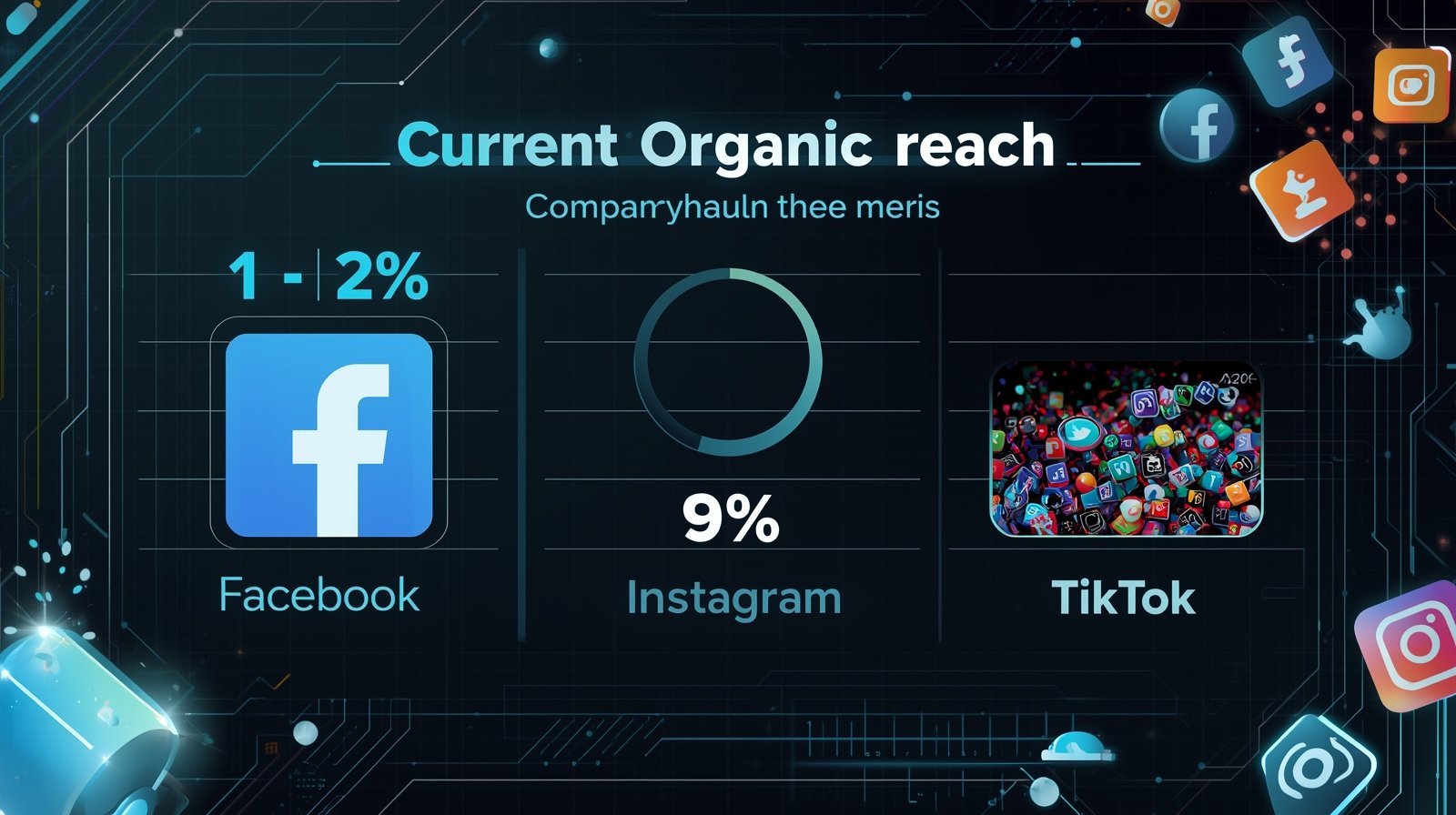
If you’ve been sharing content regularly on social media, you may have observed a significant decline in your content’s visibility — and this is the reality we’re facing in 2025. The typical organic reach for Facebook pages has dropped to a mere 1–2%. Instagram isn’t much better, with its reach hovering around 9%, although Reels still provide a solid chance to gain attention. Even TikTok, once considered the prime platform for rapid organic growth, has grown crowded, making it increasingly difficult for brands to stand out.
Several major factors contribute to this decline. Algorithms now favor content that captures attention for longer periods, often giving priority to paid advertisements. During peak times, such as the holiday season, the number of posts and interactions soars — causing your content to get lost quickly. Furthermore, user habits are continuously evolving. People scroll through feeds more rapidly, engage less with conventional posts, and tend to favor brief, digestible formats like Stories, Reels, and short videos.
This means that brands can no longer depend on the old method of “posting and hoping for visibility.” To truly stand out, they must grasp how each platform operates, develop captivating content, and foster genuine connections with their audience. Organic reach hasn’t vanished — it simply requires a more strategic and purposeful approach nowadays.
MUST VISIT: SOCIAL MEDIA CONTENT CREATION
Why organic Reach Feels “Dead”
You are absolutely right! Organic reach is not gone, but it has indeed stagnated for the majority of content. The fundamental reason is that social media platforms no longer display all of your posts to every follower. Instead, they function as a stringent filter, only favouring posts that achieve remarkable performance.
Below is a detailed explanation of the circumstances, along with essential tips for adjusting to this new reality.
- The Algorithm single Goal: Engagement
Social media platforms aim to keep you on their applications for extended periods, as this leads to more chances to present you with advertisements. The type of content that ensures longer engagement is that which you engage with actively.
- The test: When you share something, the platform’s algorithm first displays it to a limited percentage of your followers (a “test group”).
- The Reward System: If that small group engages with your post through likes, comments, shares, or saves in a short amount of time (resulting in a high engagement rate), the algorithm infers it’s high-quality and increases its visibility to a wider audience.
- The Consequence: If the test group mainly bypasses the content (resulting in low engagement), the algorithm concludes the material isn’t captivating and effectively ceases to show it to others.
- The Dominance of Paid Advertising:
Ad Inventory: Each user’s feed contains a finite number of advertising placements. When platforms allocate more space for paid ads, there is reduced “inventory” available for unpaid, organic posts.
The Squeeze: This situation creates a strong motivation for businesses to invest in promoting their content, as payment allows them to bypass the challenging organic filter and ensures visibility. Unpaid content is consequently pushed lower in the feed, significantly diminishing its visibility.
- The Dominance of Paid Advertising:
Ad Inventory: Every user’s feed can show only a certain number of ad placements. As platforms allow more space for paid ads, there is less “inventory” available for unpaid, organic posts.
The Squeeze: This creates tremendous pressure on businesses to invest in paid promotion of their content, since paying lets them avoid the tough organic filter and guarantees visibility. Unpaid content is pushed down towards the bottom of the feed, where visibility is dramatically lower.

What Still Works in 2025
- Everything that has an emotional connection or adds value will work: a story, a tip, or something useful.
- Use short, engaging videos, such as Instagram Reels or TikTok clips; they get more views and shares.
- Make posts interactive by asking questions, running polls, or quizzes, which will help stimulate conversations.
- Share real users’ or customers’ stories to help others build trust and connect.
- Posting regularly and in different formats—videos, images, text—will keep the feed interesting.
- Create content specific to each social platform, since different types of posts rank better on Instagram versus LinkedIn, TikTok, and so

Proof That Organic Reach Isn’t Dead
In 2025, the organic reach is very much alive for those brands that put an emphasis on quality content and audience engagement. Many brands grow their followers by sharing valuable, emotional, or helpful posts that actually encourage real connections. Micro-influencers do well with small but loyal followers since their content feels trustworthy and authentic.
Studies have shown that most businesses still rely heavily on organic posts in terms of building relationships and use paid ads mainly to increase reach when necessary. Brands that actually put in genuine effort to interact with their audience experience steady growth and higher sales. Mixing organic content with smart paid campaigns will help the brand reach more people while keeping its followers engaged.
In other words, organic reach works when you create meaningful content and genuinely connect with your community. It is not dead; it’s just more about quality and less about quickly posting or large follower numbers.
Conclusion
Organic reach thrives in 2025 when brands prioritize quality content, genuine engagement, and smart strategies over quick posts. Platforms reward emotional stories, short videos, and interactive formats that spark real conversations. Mix organic efforts with targeted paid ads for the best growth and lasting audience loyalty. Adapt to algorithms, focus on value, and connect authentically success follows effort, not just volume.Join Techbooz today to supercharge your YouTube channel, career, Instagram, and Facebook page!
Here are some links you must read if you’re serious about boosting your digital marketing knowledge:
- Techbooz: Instagram Algorithm Changes in 2025 Every Marketer Should Know:https://techbooz.com/instagram-algorithm-changes-in-2025-every-marketer-should-know/
- Techbooz: Social Media Search: The Death of Traditional SEO in 2025:https://techbooz.com/death-of-traditional-seo-social-media-search/
Techbooz: Marketing Psychology Secrets: What Makes People Click ”Buy Now”:https://techbooz.com/marketing-psychology-secrets-what-makes-people-click-buy-now/